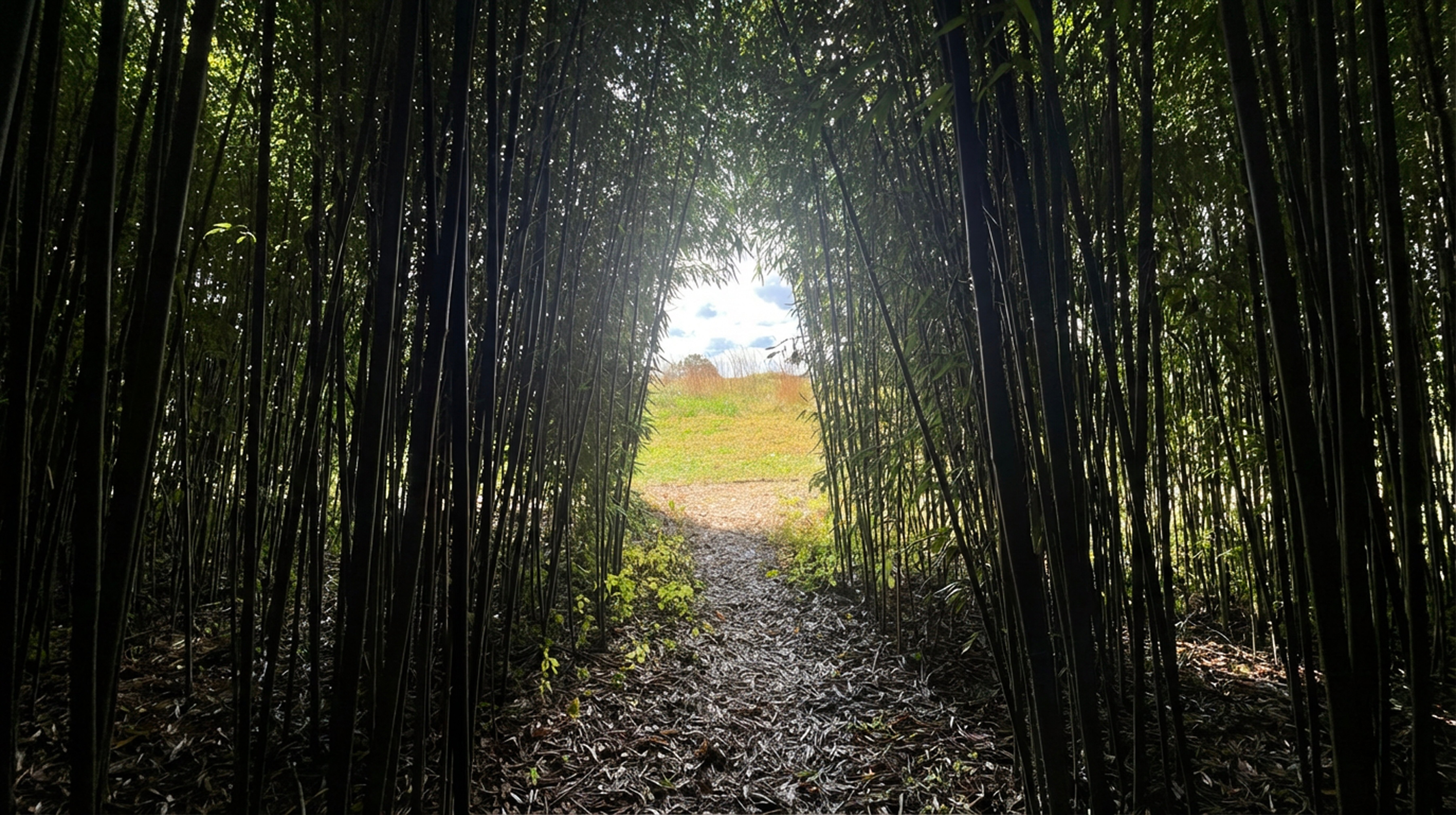


Through deep listening and an exploration of influences beyond the surface, the built environment comes to embody the vision that guides its making.
Making Places on Purpose looks at how Pirie Associates collaborates with clients, communities, and systems to shape the built world. For a bit of background, please refer to Part 1 of this series.
MAKING PLACES ON PURPOSE PART 2:
Bringing Form to Purpose
We elicit and articulate each client’s vision to create places made with intention.
Once the vision is established, design shifts into a new mode where initial conversations evolve into the work of design. The vision orients the design solution, guiding thousands of decisions, both small and large. What the built environment becomes grows directly from the vision identified in those early stages. Ideas take form, constraints are turned into opportunities, systemic health and cultural expression are mined, and materials are considered and tested.
An education project might focus healing. A non-profit organization’s landscape might emphasize ecological restoration. A mixed-use building might work to foster belonging. These ideas influence everything in a design: form, light, movement, uses, safety, health, budget, and so on. Conceptual clarity ensures coherence across the entire project through every minute decision.
Constraints as Catalyst
Every project has constraints, and we love them. They come from environmental conditions and regulations, budgets, timelines, politics… the list goes on. Instead of limiting creativity, these constraints refine and deepen it. Climate constraints guide building orientation. Limited resources drive the focus to achieve more goals through each effort. Tactical “how to” building expertise imbues the solution with technical clarity and richly layered palettes.
Iterative Collaboration
Design moves through cycles: exploration, expression, testing, revision, and finally refinement. This can be a hard thing to understand in our contemporary world of perfect images and instant gratification. We work closely with clients, community members, and consultants so each participant understands the process, the deepening work of refinement, and contributes their knowledge to strengthen the outcome.
Throughout conversations, the project’s vision remains constant to keep the project aligned with core values. The resulting built form is a continuation of the shared understanding that shaped it.
Purpose Made Tangible
To kick-off 2026, we are sharing our design philosophy, as demonstrated through a wide array of projects completed over the past ten years. These projects range from those finished nearly a decade ago to those completed last year, as well as work currently in progress. Across these examples, drawn from different areas of our practice, it becomes clear how vision, shaped through thoughtful engagement with clients, their culture, and their communities, continues to evolve. What remains consistent is our approach of MAKING PLACES ON PURPOSE, helping clients do what they do better through their built environment.
1. Baker Hall Renovation [8 Years Later]
Project Vision: “Two buildings, One school.”
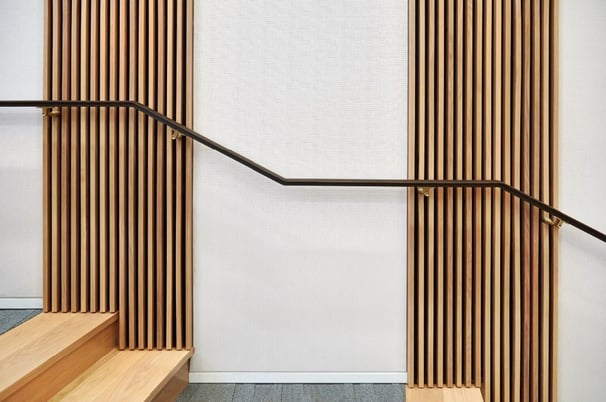 Baker Lecture Hall stair detail. Photo by John Muggenborg
Several years after completion, Baker Hall has fully realized its role in bringing student housing back to Yale Law School and strengthening the Law campus as a cohesive academic community. Baker Hall is now an integral counterpart to the Sterling Law Building, having reintroduced Yale’s long tradition of mixed-use academic environments.
Developed through close collaboration with students, faculty, and administrators, Baker Hall has proven its value as a flexible, community-centered building. Balancing the Sterling Law Building’s iconic, formal academic gestalt, Baker Hall is intentionally relaxed, allowing students to move seamlessly between learning, studying, living, and informal gathering throughout the day.
“I see it: Two Buildings, One School!” was the concept voiced by the Dean after a design meeting where the idea surfaced as an emerging concept, and it has endured as programs shifted and patterns of use matured. The building’s adaptability has allowed it to absorb change without losing clarity of purpose, confirming the value of rooting the project with clear intentionality and the applied practicality of a mixed-use approach.
Through surgical alterations and a comprehensive renovation, the project saved dollars, preserved embodied energy, reduced material waste, and extended the life of a building originally conceived as temporary. Years later, Baker Hall is an integral part of Yale Law School.
2. Coastal Residence III [6 Years Later]
Project Vision: Reimagine a home as a compact, net-positive dwelling where daily life is intentionally organized around landscape, energy, food, and family.
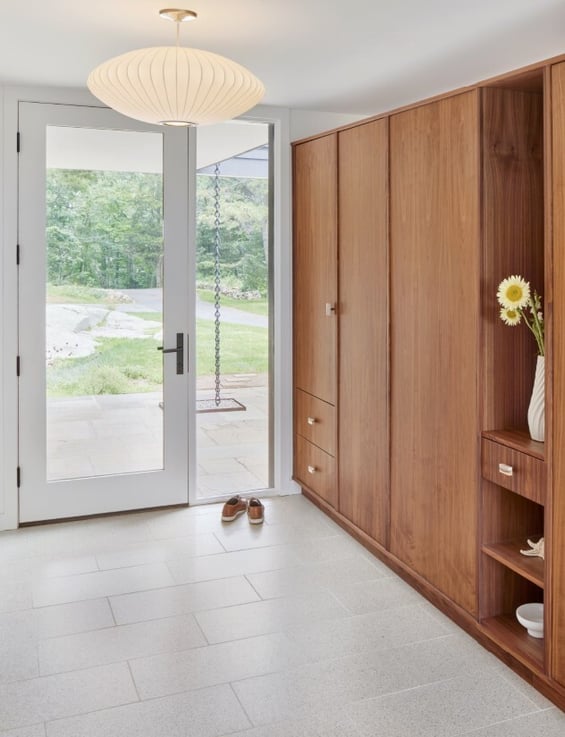
Outdoor vista at Coastal Residence III. Photo by John Muggenborg
This New England coastal mid-century home was reimagined from the inside out for a 21st century family. The goal was disciplined and clear: create a net-positive, self-sustaining, nature-connected home in the smallest footprint possible. Over time, the project demonstrated the power of focusing on four intertwined priorities: family, work & play, energy, and food.
Making this place on purpose meant organizing daily life around both human needs and ecological systems. The home was structured into three zones aligned with the landscape. Quiet restoration spaces face the woodlands and marsh, supporting rest and retreat. Group nourishment spaces connect the kitchen and dining areas directly to gardens and outdoor gathering spaces. Active engagement spaces, oriented toward the tidal waterfront, successfully support work, recreation, and shared activity.
Both adults work from home, so designing flexibility into the architectural solution was essential. When work recedes, these areas easily shift into zones for play, exercise, and family time.
This fully electric renovation used orientation, thermal mass, and a tight envelope to help maintain thermal comfort with minimal intervention. A 30 kW solar array powers the home, two electric vehicles, and a hot tub. Remarkably, no supplemental heat was required during the first winter after completion, a testament to the design’s effectiveness.
Years on, the client is implementing our landscape diagram themselves, guided by an intimate understanding of how they engage with their ecosystem and informed by the evolving needs of their family.
3. Swift Factory Courtyard [5 Years Later]
Project Vision: Change a “gap” between buildings into a landscape gathering space that embodies the client’s mission of dignity, connection, and possibility.
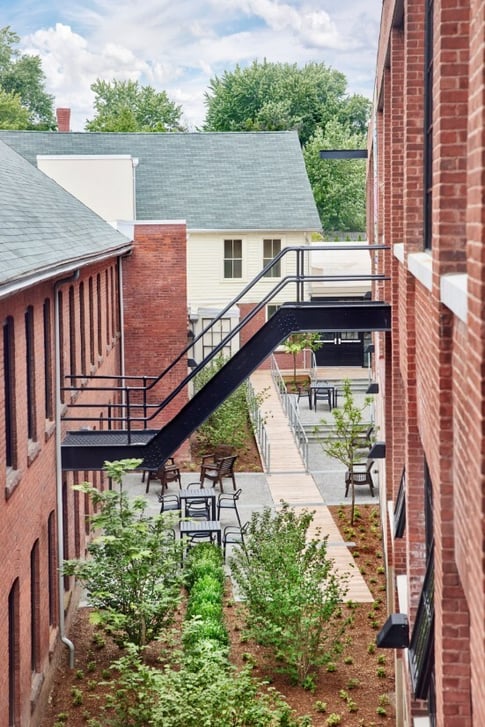 Dignity, connection, and possibility. Photo by John Muggenborg
The Swift Factory Courtyard in Hartford’s North End Neighborhood demonstrates that even a small outdoor space - originally functioning as a factory building light well - can create outsized impact. Our client, Community Solutions, recognized the potential of the old factory to once again serve as an igniting economic and social force. After the building was adapted, one dream - and the task of our effort - remained: to create a gathering courtyard where people could meet, work, relax, and connect.
The gap between the buildings originally existed to bring light into interior spaces. Our challenge was to transform what was once “left over” into a meaningful place. Reimagined as a biophilic asset, the gap now functions bi-directionally: it continues to bring light in while providing a view into - and a presence within - a new, terrarium-like landscape. Plantings were carefully chosen for resilience, impact, and meaning: sunburst honey locust, witch hazel, and daffodils introduce a palette of bright, luminous yellows that illuminate the courtyard and reference the site’s history as a gold leaf factory.
Material choices reinforced environmental responsibility. Durable black locust wood decking forms an accessible ramp, providing an equitable path for all, while permeable stone dust and local bluestone support seating and manage stormwater. Limited access to the building gap required a structural system that could be installed by hand, leading to the use of helical pile foundations, which is an approach that also minimized concrete use and reduced costs.
Five years later, the courtyard continues to support informal interaction, short conversations, and outdoor breaks. It shows that making places on purpose doesn’t require a lot of elbow room to align intention.
4. NCD Playbook [1 Year Later]
Project Vision: Meet each neighborhood where it is and move all forward
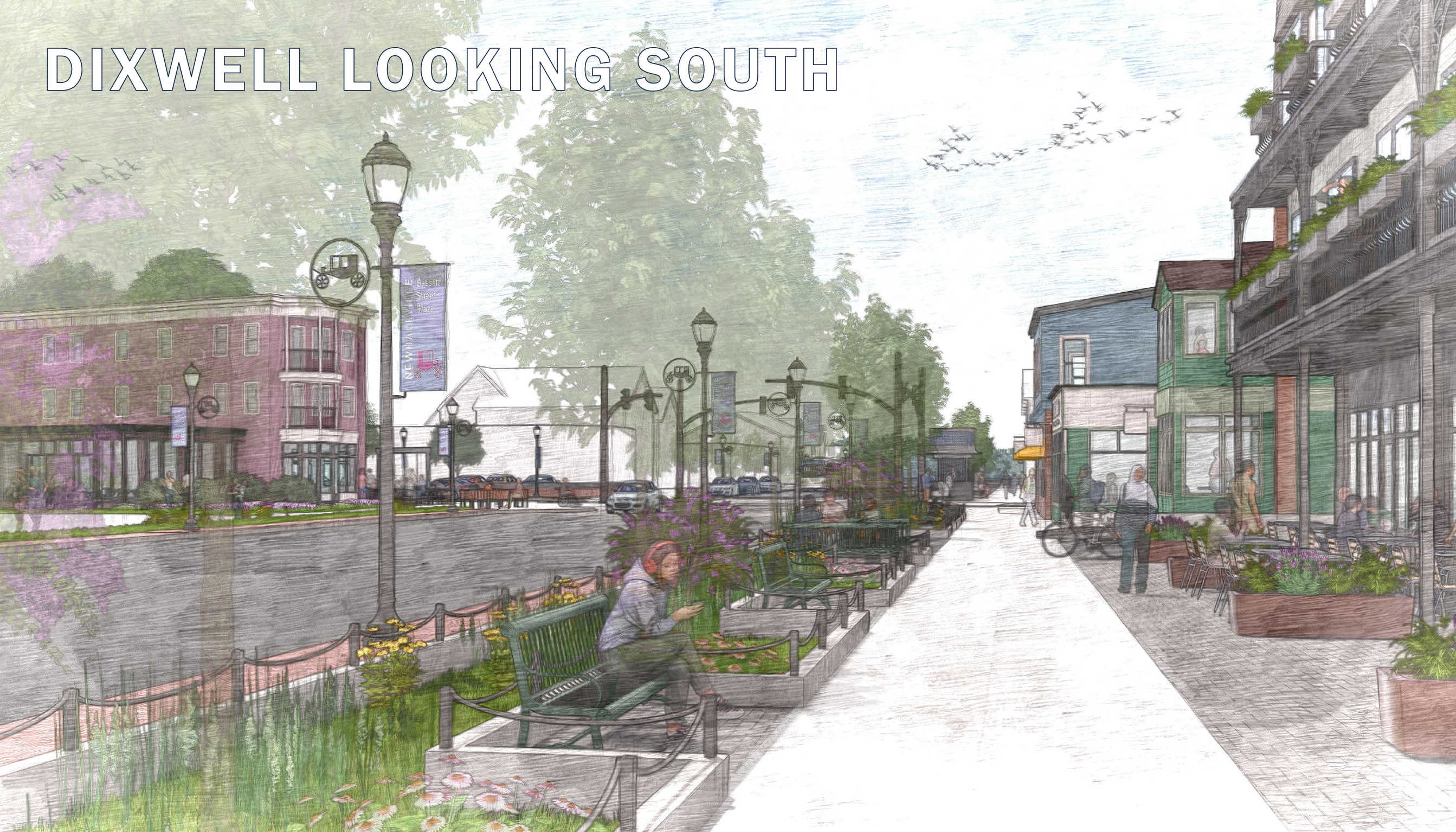 Case study envisioning a safe and walkable mixed-use neighborhood. Image by Pirie Associates
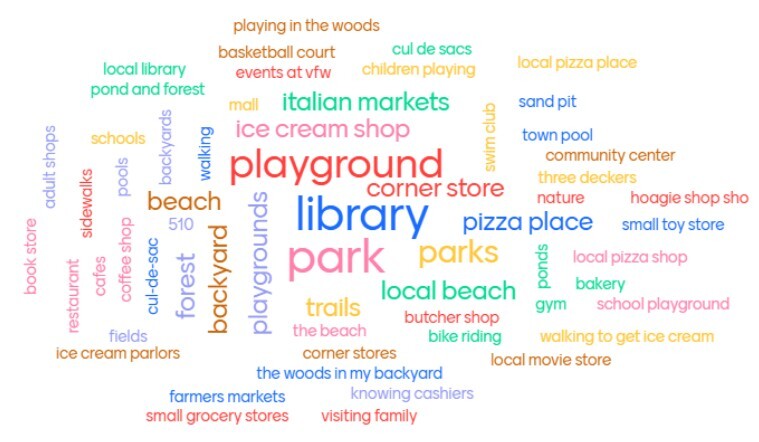
As with every project, our process began with listening. We heard about the municipality’s long-term economic, cultural, and environmental aspirations, the challenging impact of having uneven resources available to support them, and the urgent need to address these disparities so that each neighborhood could thrive. Then, we turned our attention outward to engage residents and stakeholders, who helped us identify what was working or not working, and what opportunities might exist just below the surface.
Rather than prescribing a single aesthetic or economic solution for all neighborhoods, the Neighborhood Commercial Districts Playbook offers a step-by-step approach: outlining attributes to assess and address, defining design visions and strategies, providing an investment framework, and establishing an ongoing support plan; all to reflect and strengthen the character, economic vitality, and potential of each neighborhood.
Today, we’ve seen that grounding strategy in local identity allows cities to leverage existing assets, strengthening the link between place and prosperity.
5. Georgetown Revitalization [Ongoing]
Project Vision: Build on a culture of care and a historic wire mill complex, including its Main Street, to bring much needed residences to the town while creating a community-centric destination for all where art and nature intersect.
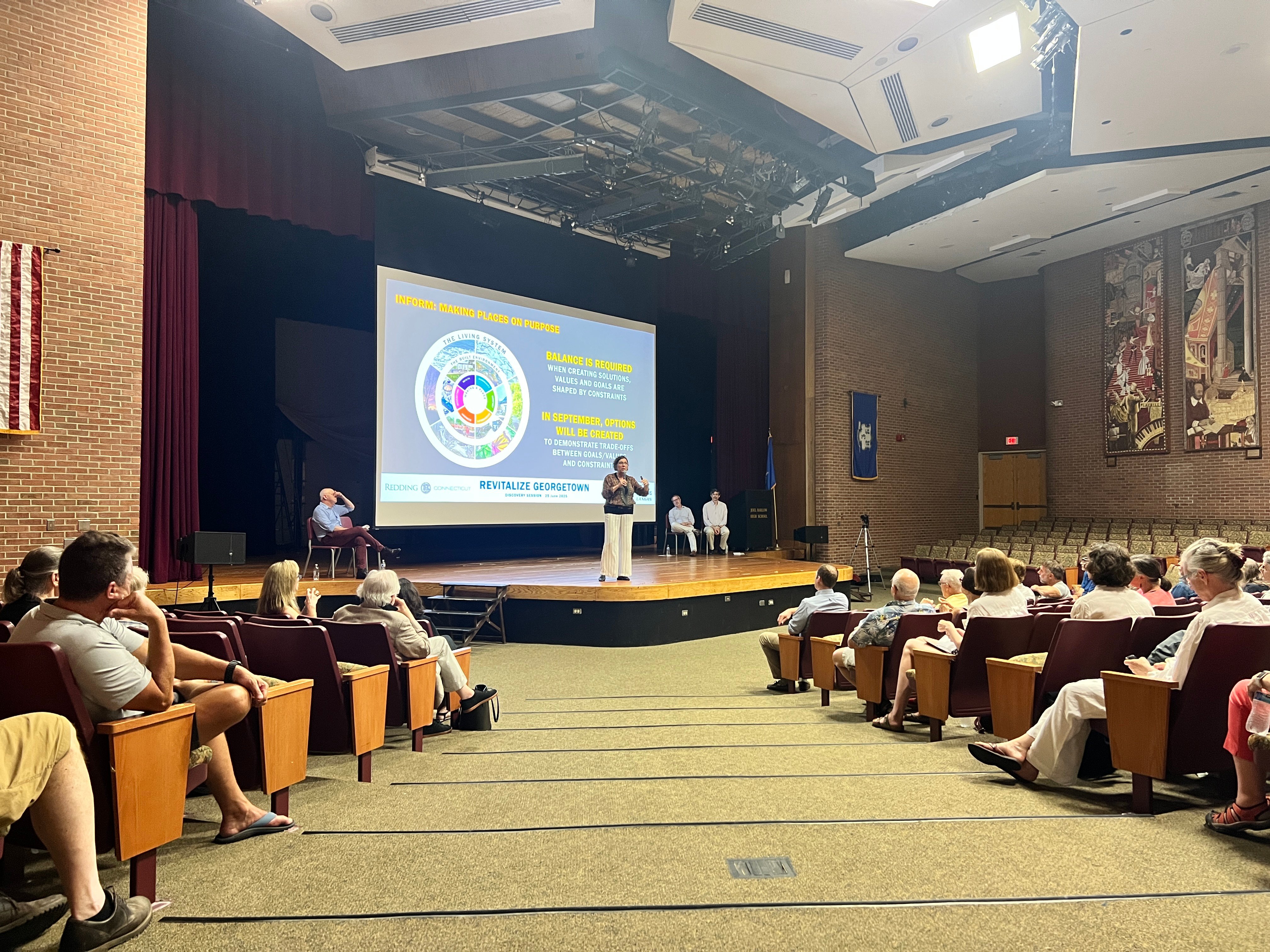
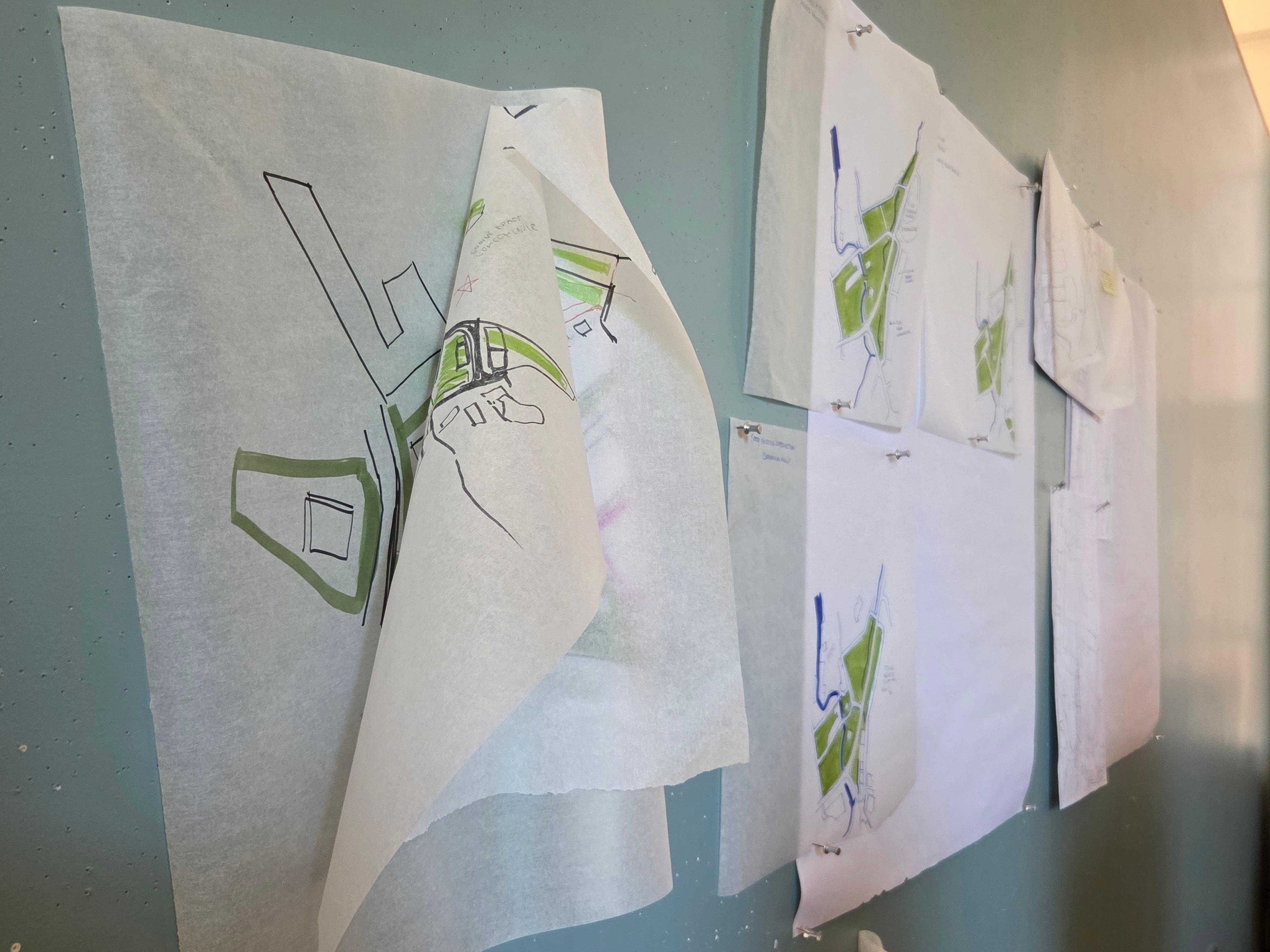
Pirie Associates leading a Discovery Session in Redding, CT, Summer 2025. Photo by Amy Albandoz
We are collaborating with the town of Redding to revitalize Georgetown Village, the only commercial center in town. This project exemplifies how our firm’s design process merges human health, ecological regeneration, and economic vitality.
Currently in the public opinion stage of our process, the design options under consideration were developed with the town’s priorities in mind: revitalizing the old mill complex, increasing residential choices, enhancing walkability, and creating a cultivated public park with cultural spaces rooted in multi-modal and regenerative design best practices. Social, cultural, and natural resource connections are woven together through plazas, trails, and arts spaces. Increased residential density and diversity (from accessory dwelling units to multifamily housing) support inclusivity and provide residents with access to healthy, pedestrian-oriented lifestyles. Integrating arts, culture, and nature draws on the generations of “makers” from the mill complex, reinforcing cultural connection and wellbeing that emerges from working as a community. The proposed uses also situate Redding within Fairfield County’s arts and culture context- not just as observers, but as active creators, consistent with the history of this place.
Our goal for Georgetown’s revitalization is to protect and restore the natural landscape by minimizing carbon emissions and harnessing solar energy, translating sustainability into a living-systems framework. Large green spaces (up to 23.5 acres) provide buffer zones, cultivated landscapes with programmed activities, and resilient waterways within restorative environments. On-site energy generation is anticipated to reach up to 1.2 million kWh per year, moving the Georgetown neighborhood toward energy self-reliance. Lastly, the site also connects resources as part of a broader ecological network, linking Georgetown Village to regional trails, riparian edges, wetlands, and forest systems
Conclusion
Every project we have shared here (and many more) grew from a clear vision, rooted in local culture and community. These purposeful places, even when “complete,” continue to evolve as living assets, adapting to new needs and rituals while welcoming new possibilities.
When design is grounded in purpose, its impact extends far beyond aesthetics. Underpinning everything we do is the commitment to design that can strengthen communities, reflect identity, nurture well-being, and shape environments that help people imagine and build the futures they desire. That is why we love what we do.
We would love to hear your thoughts:
Please click this link to submit a comment on our blog series, Making Places on Purpose!
Have an inspiring 2026!