

Making Places on Purpose creates more than the physical built environment. It creates places where people feel connected to one another, to their surroundings, and to their imagined futures...
Every place carries more within it than what appears at first glance. Some stories of place are shared openly in community goals, institutional missions, or long-standing traditions. Others are quieter, found in daily routines, in the patterns of gathering or moving, or in the ways natural systems and cultural memory shape each other. Recognizing and ordering these nuanced layers - in all their complexity - is the foundation for our design approach. We draw out these nuances so that the built environment we design with our clients embodies their aspirations and the history and systems of place.
Our work begins well before drawings appear. It starts with understanding how people live, what they value, how they imagine change, and how their environment influences their choices. This attention expands outward to other conditions that give each site its character. With this knowledge, design becomes a process of translation, turning insight into direction and direction into places that support belonging and identity.
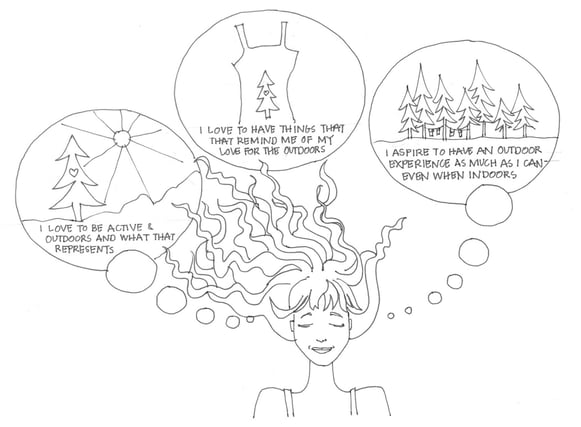
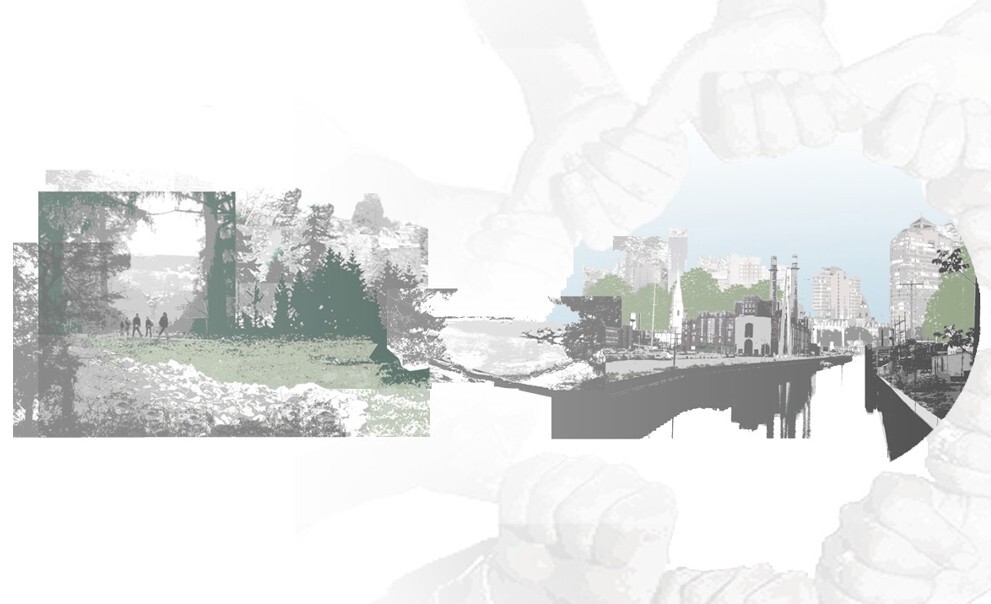
Meaningful design reflects the aspirations of its users. Drawing by Laura Pirie
This two-part blog series seeks to explain our process and make it more visible. Part 1 focuses on discovering what matters most: how we listen and how a project purpose takes shape. Part 2 describes how purpose becomes form: how ideas develop, how constraints guide decisions, and how places grow from the values that inform them.
PART 1: Discovering What Matters
Our approach begins by asking questions. Before any schematic design takes shape, we look closely at the people who inhabit a place, the forces that influence daily life, and what defines a given site. This early work is essential because a project succeeds when it is rooted in place and reflects both present realities and future needs.
Listening is a Design Tool
Listening guides everything we do. It means paying attention to spoken priorities as well as unspoken concerns- like noticing how people use space and understanding the cultural and environmental influences that shape their experience. What do people want, but also what stands behind their wishes? What memories define this place? What rhythms anchor it? What hopes should shape decisions about the future?
Each person experiences a place differently: what one person notices, another may overlook. Recognizing this experiential diversity is critical to guiding a design solution that draws from as many people’s experiences as possible, including those who are not often present.
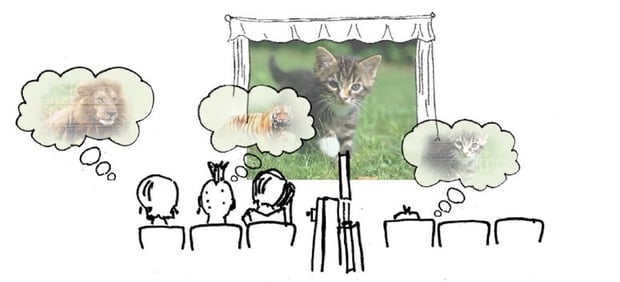
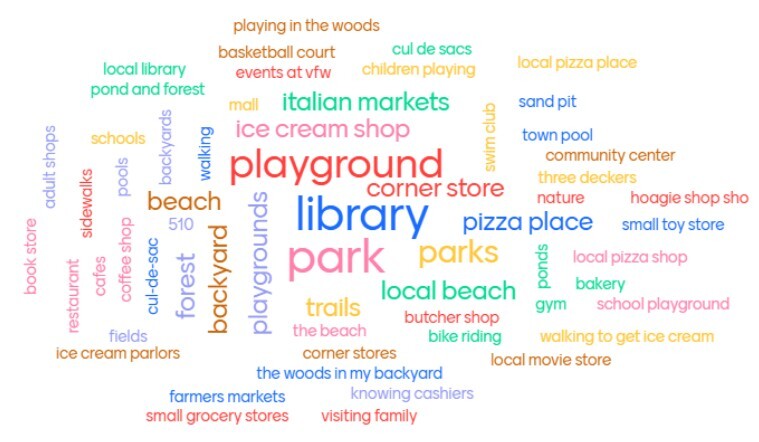
There are many perspectives to consider when looking at a design opportunity. Each person comes with their own interpretation of the same information. Understanding this helps us grasp the situation more clearly. Drawing by Laura Pirie & Chris Hayner
To surface these insights, we create opportunities for participation. Storytelling reveals experiences that rarely show up in surveys. Walking tours highlight how spaces function hour by hour and season by season. Workshops and mapping exercises help people visualize social ties, environmental conditions, and spatial relationships that are not always obvious.
Out of this dialogue, patterns start to appear and a shared sense of purpose becomes clearer. When a group reaches a shared understanding, design decisions more ably reflect collective values.
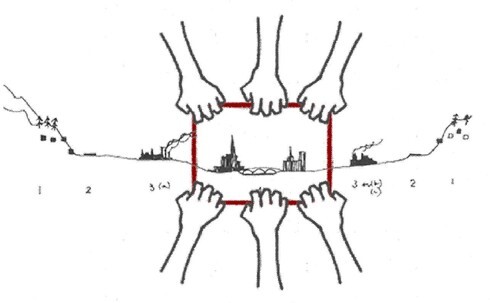
Building a common frame of reference is often the first step in a design project. Drawing by Chris Hayner
Places are Part of Living Systems
Every site exists within a web of larger systems: ecological networks, cultural narratives, economic realities, and community relationships. When we study these systems, design becomes responsive and grounded rather than detached and generic.
Ecological study might reveal how water moves across the land or how microclimates shape outdoor comfort. Cultural history may point to long-standing identities, community rituals, or local building traditions. Economic analysis often highlights existing strengths, gaps in opportunity, or ways to support the people who already call the place home.
Recognizing these connections helps us find opportunities that extend beyond a project’s boundary. A community center can restore ecological function. A library can reinforce civic identity. A streetscape can support local businesses and improve safety.
Places thrive when they support the full network of community life.
Defining a Shared Purpose
The insights we gather form the basis of a project vision. This vision becomes the guidepost for decision-making and the north star when choices become complex. The vision clarifies what matters most and directs the work toward outcomes rooted in the needs and values of the project at hand.
Each project vision is unique and may focus on cultural continuity, social well-being, environmental health, economic stability, a blending of these, or something else. Whatever its emphasis, the vision offers a framework that connects the realities of place with the aspirational ideas for the built environment.
Ideas Are not Solutions
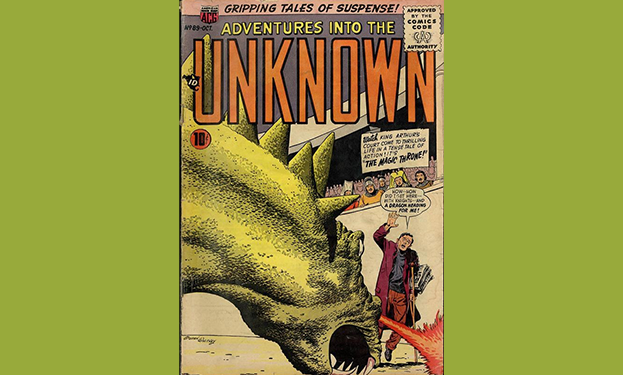
When designing built environments, ideas are often confused with solutions. There is rarely only one solution; instead, ideas are evaluated, refined, and ultimately distilled into the most fitting solution which considers safety, value, and other drivers important to the client. Why design a bat signal when a headlamp will do?
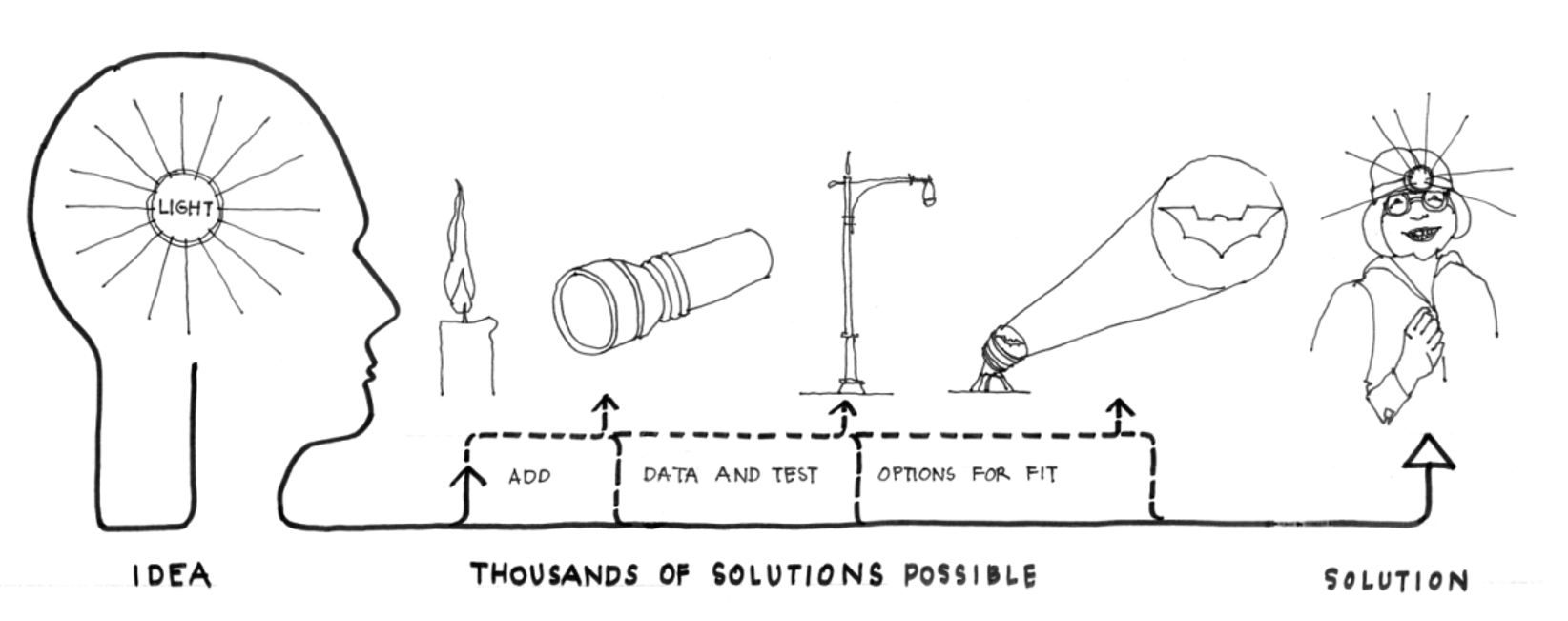
Our design process explores multiple avenues to move the vision (idea) into form (solution). Drawing by Laura Pirie
When this approach foundation is strong, a project gains clarity, and a right-fit solution emerges.
Through listening, creating a vision, and using constraints to evolve the right fit solution, our work of turning insight into vision and vision into places made on purpose leads to built environments that embody the aspirations of the clients, are rooted community and place, and thoughtfully engage living systems.
click here for part 2!
Top Image Credit: From our office trip to Hogpen Hill Farms, 2025, by Paul Butkus